
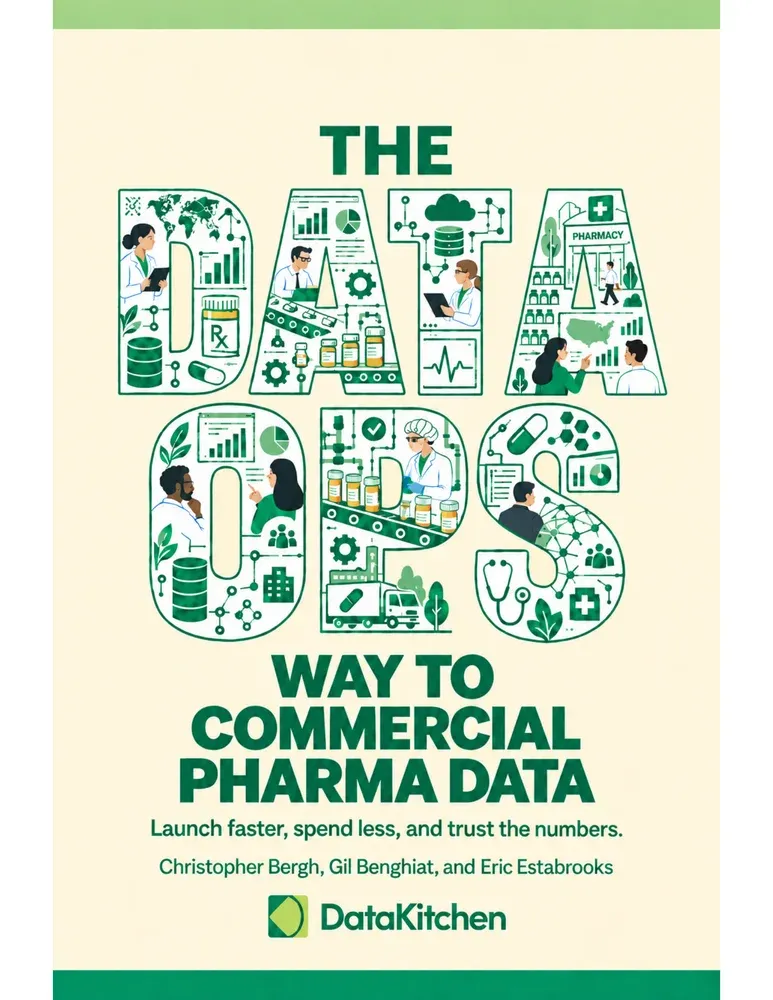
Why we wrote it
Commercial pharma data is not like other data. The feeds arrive from vendors you do not control, on schedules that slip, with identifiers that look valid and are not. A prescriber gets duplicated and the incentive comp run pays the wrong rep. A specialty pharmacy file lands half empty during the weeks that matter most. And all of it lands on a clock, because the first six to twelve months of a launch set the trajectory a brand rides for the rest of its life. You get one chance at the field’s trust.
The people asking for those numbers are demanding, and they should be. A brand lead who catches a bad number once stops trusting the dashboard for good. Commercial teams work with some of the most complicated datasets in any industry and know their market and their customers extremely well. What they are not, and should not have to be, is data engineers. They should never have to know why the IQVIA refresh disagrees with the claims file.
The three of us have worked with commercial pharma data for more than two decades. Seven of our engineers supported about $10 billion in US sales at Celgene, with ten to 12 analysts covering hundreds of datasets and no missed SLAs. One and a half engineers built and ran the launch data platform behind Cobenfy at Karuna, across 50 integrated datasets. Three of our customers have been acquired for nearly $100 billion combined. We did not get there with more people. We got there by treating the commercial data operation as a factory: one that tests every table on every run, deploys through automation rather than tickets, and catches a bad vendor file before the field ever sees it. That way of working is DataOps. It is the argument of this book.
The chapters were written over ten years and gathered in one place for the first time. They cover why commercial pharma data fails in the specific ways it does, what a launch data platform has to deliver and when, who should run your commercial data and what it should cost, the process hub and platform underneath, and what AI changes about all of it. Some are case studies with the customer’s own numbers. Some are arguments we expect you to disagree with. People who have run the standup, chased the vendor about the late file, and explained the restated number to the brand lead wrote every one of them.
Our tools are open source, our engagements are flat rate, and the code lives in your repository from the first sprint, so the platform is yours to keep or hand to whoever you name. We wrote this book for the same reason we work that way: the knowledge of how to run commercial pharma data well should not be locked inside a consulting contract.
Download the free 209-page book here: